
Have a service question? Explore the related service or call to discuss the door.
A local starting point
A loud bang, a suddenly heavy door or an uneven lift can point to a lifting-system problem. Those symptoms deserve a pause, not repeated tests with the opener. Spring replacement is work on loaded hardware, and the useful homeowner role is to describe what happened and keep the opening clear. Rain, wind-driven debris and seasonal temperature changes can expose worn seals or an opening that does not sit evenly. Coastal exposure, where it applies to the property, is worth mentioning, but the actual material and hardware condition still need an inspection.
Recognize the warning without testing the load
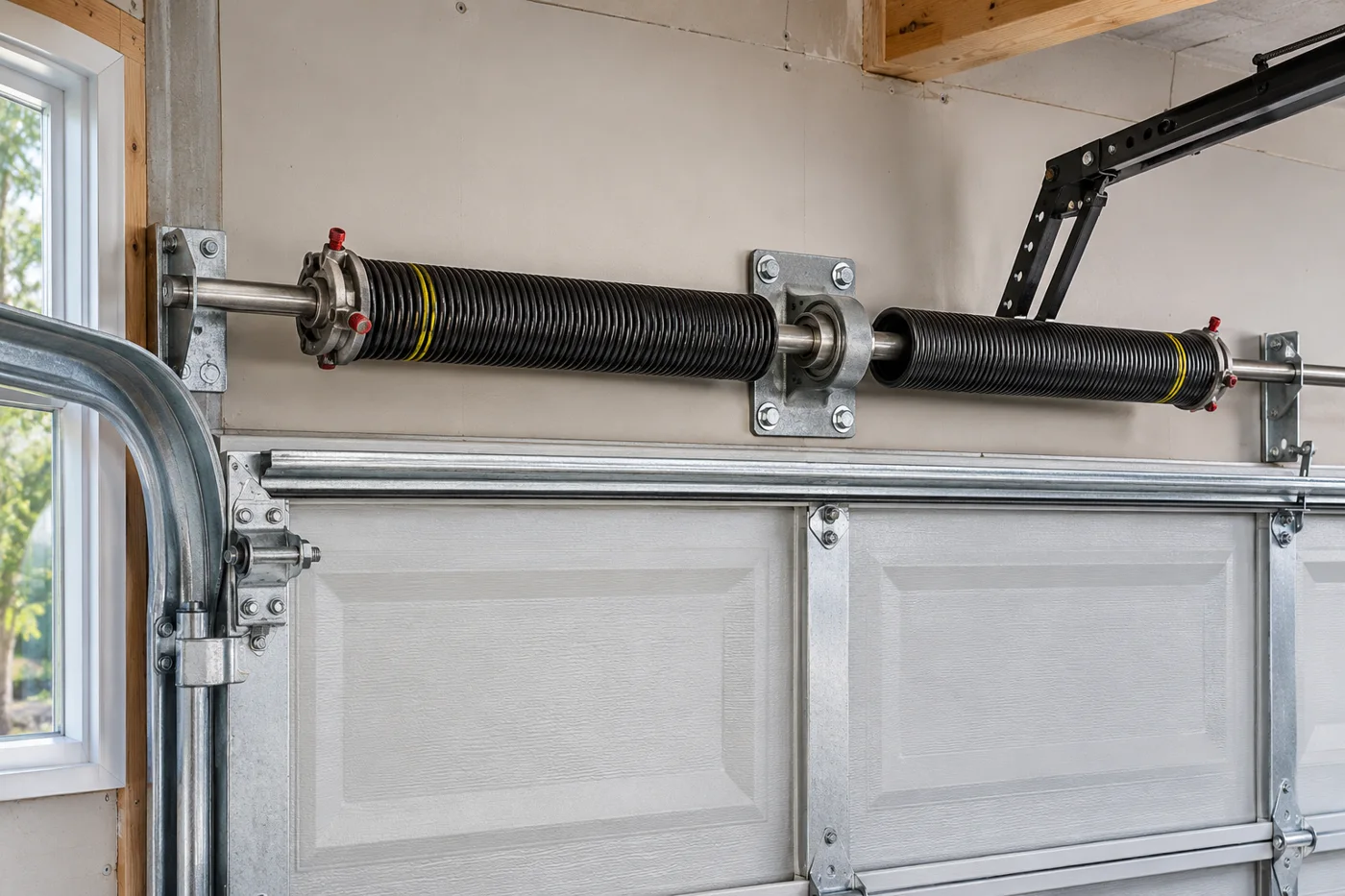
A visible gap in a torsion spring, a hanging cable, a door sitting crooked or a motor that runs without a normal lift can all be important observations. They are not a complete diagnosis. Stop operating the door if it looks unstable, and do not pull an emergency release on a raised or compromised door. Releasing the operator does not remove the weight of the door. Explain its current position when you call.
The correct spring depends on the door
Spring selection is tied to the actual door and lifting arrangement. It should not be chosen from a photograph, a color marking alone or the horsepower printed on the opener. Door dimensions, construction, weight and the existing system need assessment. Ask what the technician has identified and how the proposed hardware relates to the door. Avoid purchasing parts before the assembly is measured and its condition is understood.
Ask about the rest of the lifting system
Cables, drums, bearings and attachment points work alongside springs. A broken spring may be the obvious failure while another worn or damaged component also needs attention. Ask what is being inspected, which parts are included and whether the remaining hardware is compatible and serviceable. For a two-spring assembly, discuss the condition of both springs and the manufacturer’s requirements rather than assuming that replacing one visible failure defines the whole scope.
Plan around your property
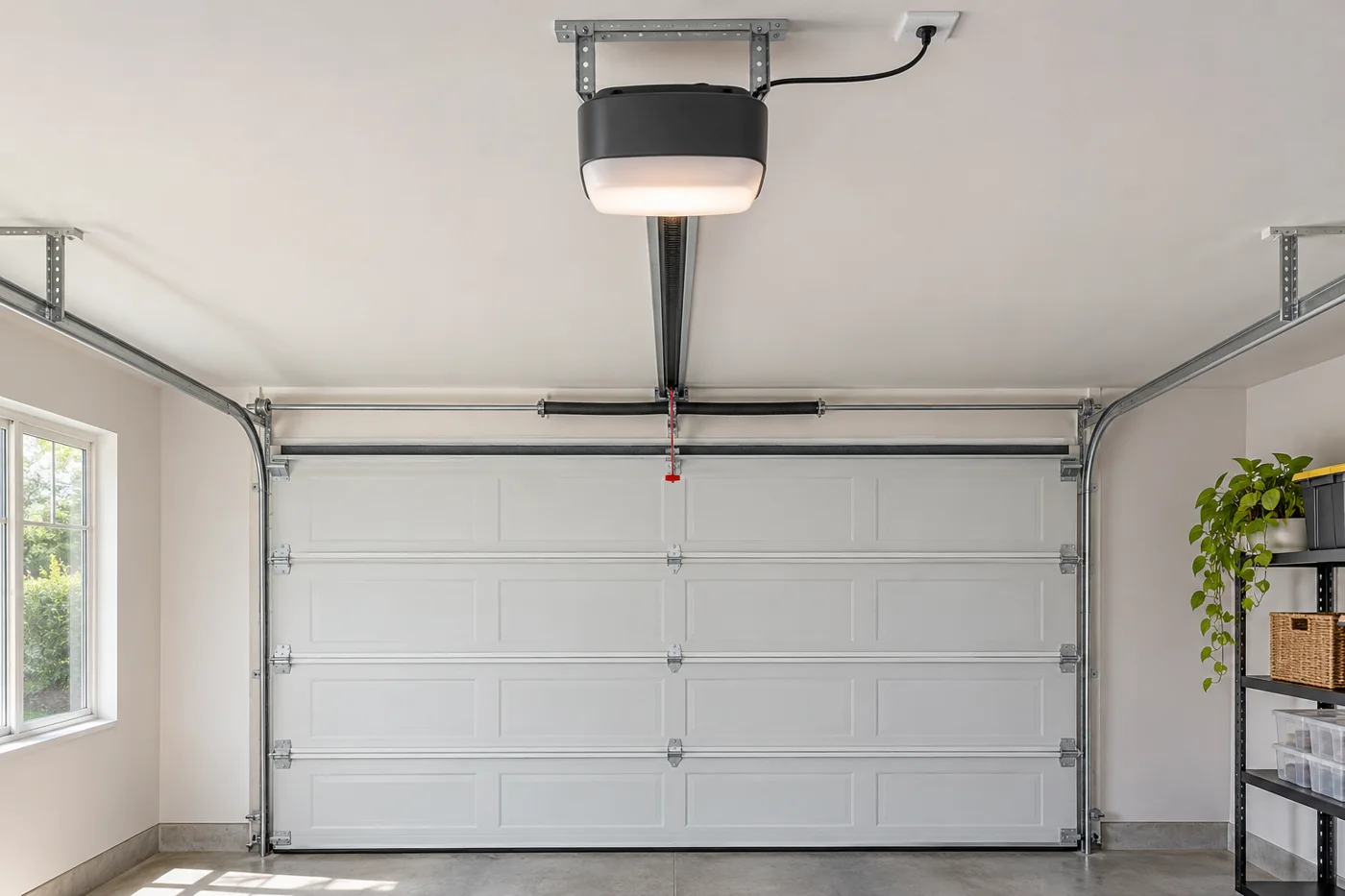
Tell us about a shared driveway, community access rules, delivery hours or a garage beneath living space. Confirm the town when calling so the request is routed to the right part of central New Jersey. A shore-area home, an inland attached garage and a commercial bay should not be treated as the same installation. Explain the use, opening, available headroom and any property rules before choosing an assembly. Think about the entrance as part of your routine: when it is used, who needs access and what needs to remain clear. These details help make the service conversation specific without assuming that every property needs the same equipment or work.
Clarify the operating checks after the repair
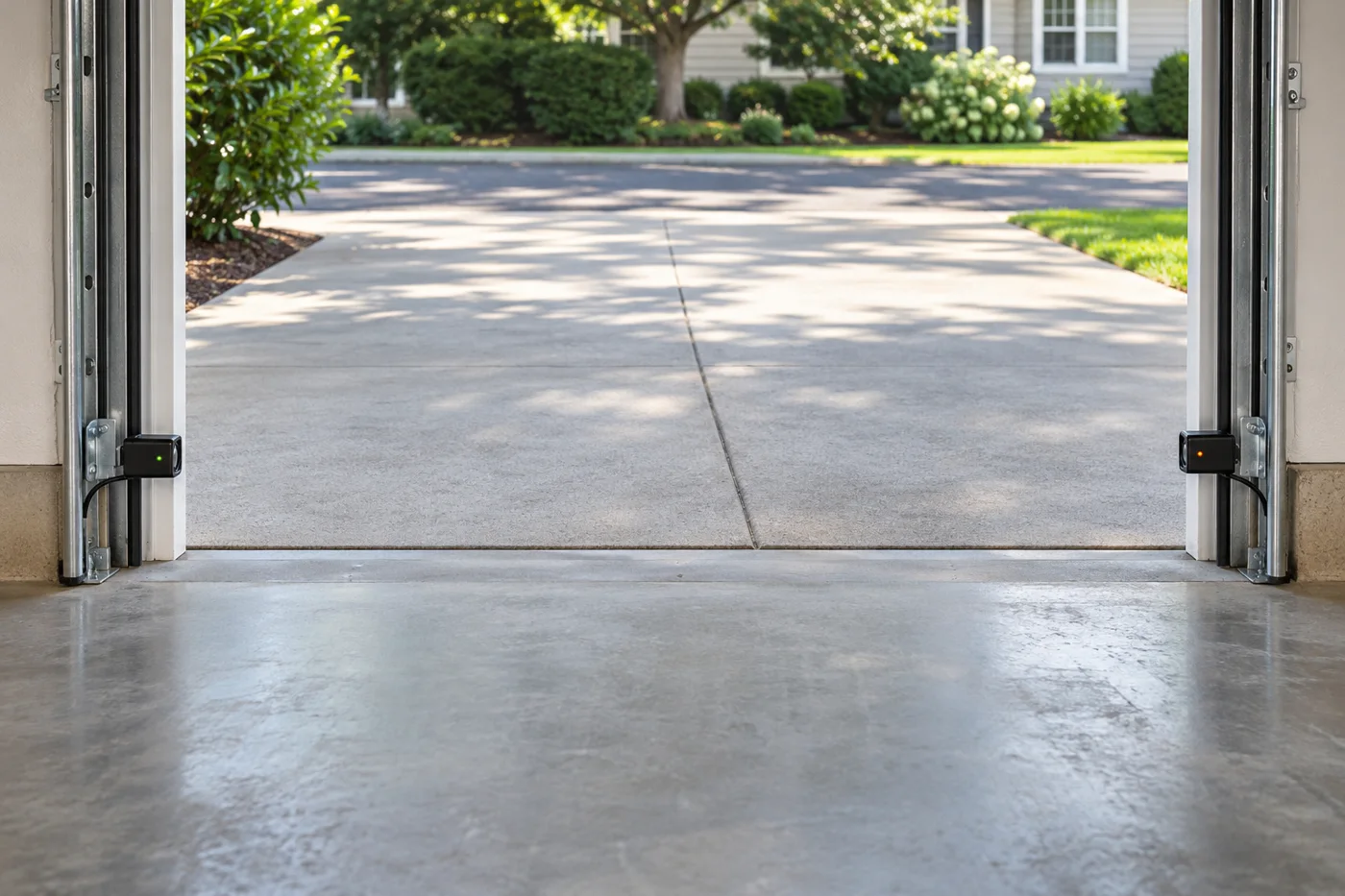
The conversation should include how the complete door is checked after the work and whether the operator and safety features are assessed as part of the agreed scope. This is not a request to perform a balance or reversal test yourself on a damaged door. Follow the exact instructions supplied for your system after it is returned to service. Keep those instructions available for future maintenance questions.
Make the first call useful
Tell us whether the door is fully closed, raised or stopped partway and whether a vehicle is trapped. Mention the bang or movement that led you to suspect a spring. Keep people away from the opening and do not touch cables, brackets or the spring assembly. Call 24/7 to discuss the problem and the next step. Service suitability, the work required and appointment timing are confirmed directly by phone.
Further reading
DASMA garage door systems safety guidance ↗
Follow the instructions for your exact door and operator. This guide helps with recognition and planning; work on loaded lifting hardware belongs with trained technicians.